Archaeomagnetic Dating of Roman Iron Age Kilns
Abstract
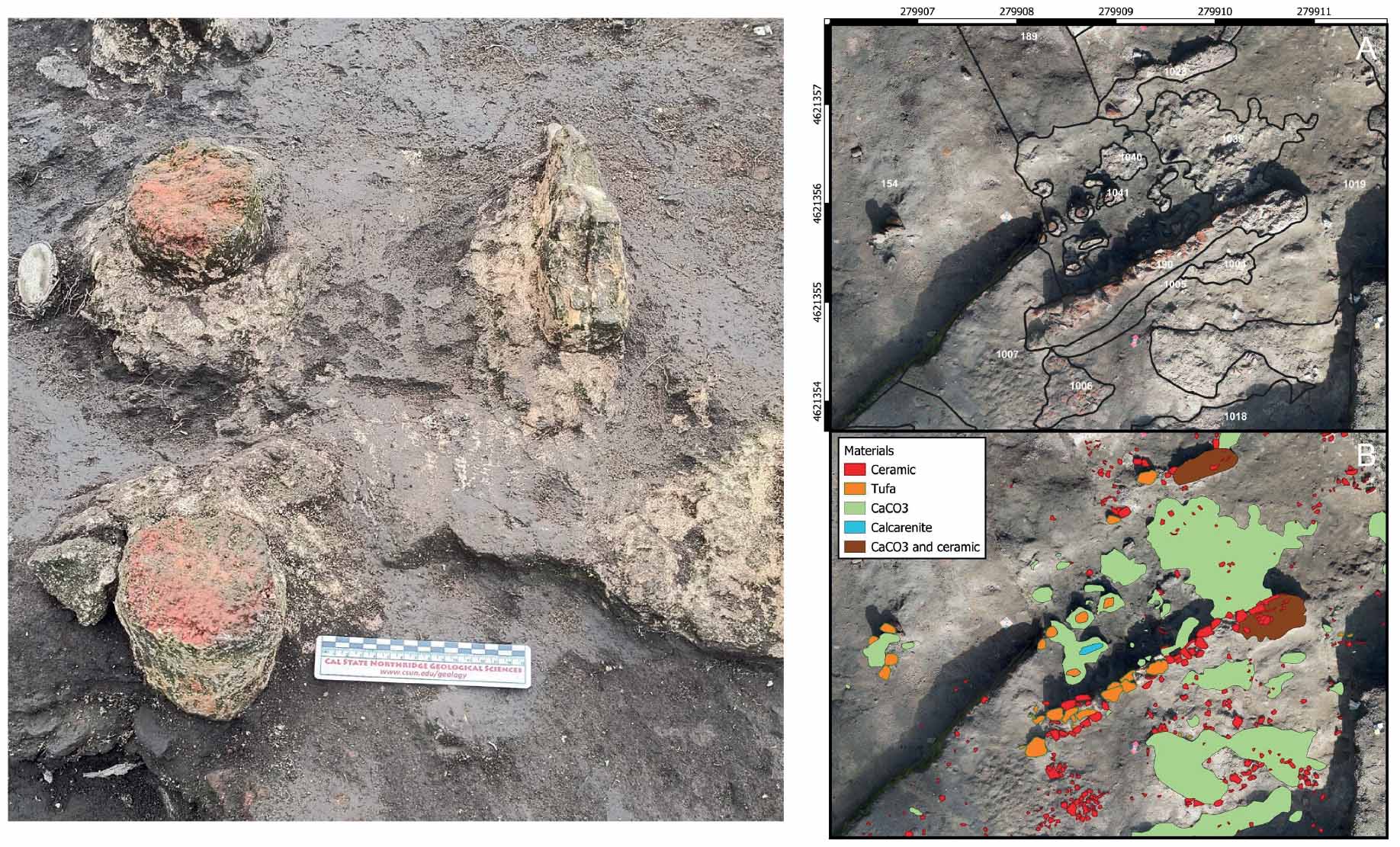
The geomagnetic field presents continuous changes over time, a phenomenon that provides a valuable tool for dating archaeological materials, particularly those exposed to high temperatures, such as kilns and ceramics. This study focuses on a Iron Age kiln used for salt production in the site of Piscina Torta (Rome), with four oriented hand samples collected and analyzed. Alternating field demagnetization experiments were conducted to determine the paleodirection of the geomagnetic field recorded in the kiln during the last heating event, as well as rock magnetic experiments to determine the magnetic behavior of the samples, which included thermomagnetic curves and hysteresis loops. Using the inclination and declination obtained, the software ‘ArcheoDating’ was employed to estimate the kiln's last heating event. By comparing the direction obtained with the European regional geomagnetic model, the software determined the most probable date range of the kiln studied. The archeomagnetic age is consistent with preliminary radiocarbon and archeological observations.